
What is an EPC?
An Energy Performance Certificate (EPC) provides an energy efficiency rating in relation to the property’s running costs. The energy efficiency rating will take into account the potential energy performance of the property itself (the fabric) and its services.
In order to produce a legally valid EPC an accredited Energy Assessor will need to collect the following information:
- The Property Type (i.e. flat, bungalow, detached or semi-detached)
- The age of the property
- The dimensions and number of floors/storeys
- Amount and type of glazing
- Material used to build the property (brick, timber frame etc)
- Insulation levels
- Heating systems and fuel used
- New technologies
Not all properties are used in the same way. The energy efficiency rating uses ‘standard occupancy’ assumptions (typically 2 adults and 2 children) which may be different from the way in which occupiers actually use things like heating and lighting within their property.
When will I need an EPC?
An EPC is required when a property is new built is marketed for sale or rent. Other policies may also require an energy certificate.
How long does an EPC last?
An EPC is valid for 10 years or until a new EPC is produced for the same property no matter how many times the property is sold or rented out during that period. Existing occupiers and tenants will not require an EPC unless they sell, assign or sublet their interest in a building. Once an EPC has expired it is no longer a legally binding document.
Energy efficiency rating
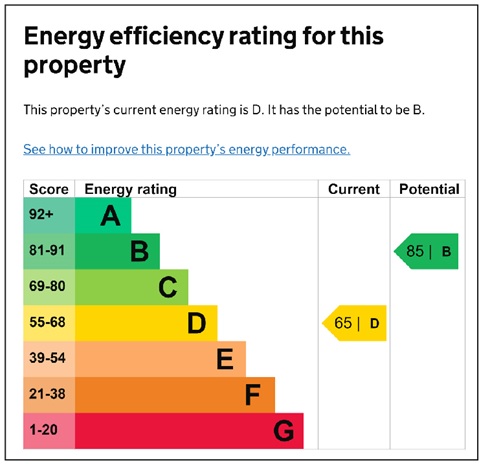
The Energy efficiency rating will be displayed on a A to G scale. With the least efficient buildings being G rated and the most efficient being A rated.
This rating is actually based on cost factors such as the type of fuel used for heating, hot water, lighting and ventilation.
Currently if the property uses mains gas it will score higher on the energy rating as opposed to a property that uses electricity. This is due to mains gas being cheaper per p/kWh than electricity.
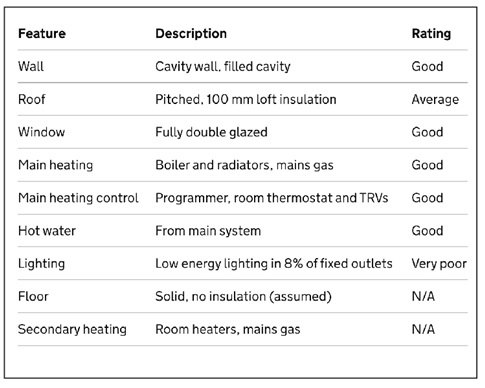
Breakdown of property’s energy performance
The individual features (floor, lighting wall etc) assessed as part of the energy assessment are also provided with an energy performance rating within the EPC.
These ratings can go from very good (most efficient) to very poor (least efficient) and do not consider the actual condition of the feature itself. No rating is given for floors or secondary heating.
This particular rating is calculated from *
- The energy efficiency cost rating
- The environment (Co2) rating
In the case o hot water, heating and water responsiveness would also be considered.
You may also see the word ‘assumed’ in this part of the EPC. This is automatically generated by the energy assessment software based on a number of factors such as the age of the property and whether there is insulated etc.
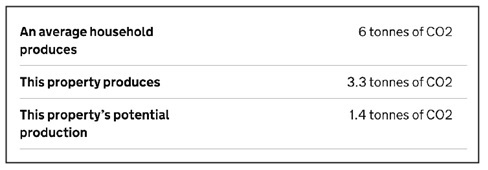
Environmental impact of the property
The EPC currently shows the environmental impact as an A to G rating allowing you to draw comparisons with average households.
The Environmental impact rating is again based on assumptions about average occupancy and energy use. They may not reflect how energy is consumed by the people living at the property.
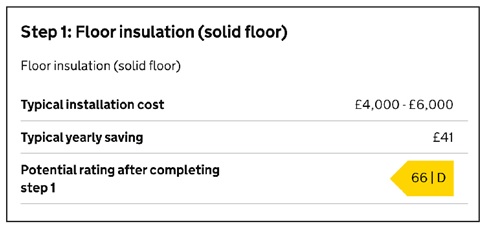
Recommendation for improvements
You will find a list of recommendation on how the property’s energy performance can be improved. The typical installation cost if based on average installation prices across the country so may not be representative of the actual costs in your area.
The recommendations are cumulative meaning that they should be installed in the order they appear to achieve the potential energy efficiency rating displayed on the EPC. Should you choose not to follow the order they appear the potential energy efficiency rating may change.
Estimated energy use and potential savings
The EPC will not reflect the actual energy use as the calculation is based on standard occupancy. It is designed this way to enabled similar properties across the country to be compared. If you wish to have a report to reflect your actual energy costs you should contract a retrofit assessor who will be able to complete an occupancy assessment.
 Howlands EPC Services